

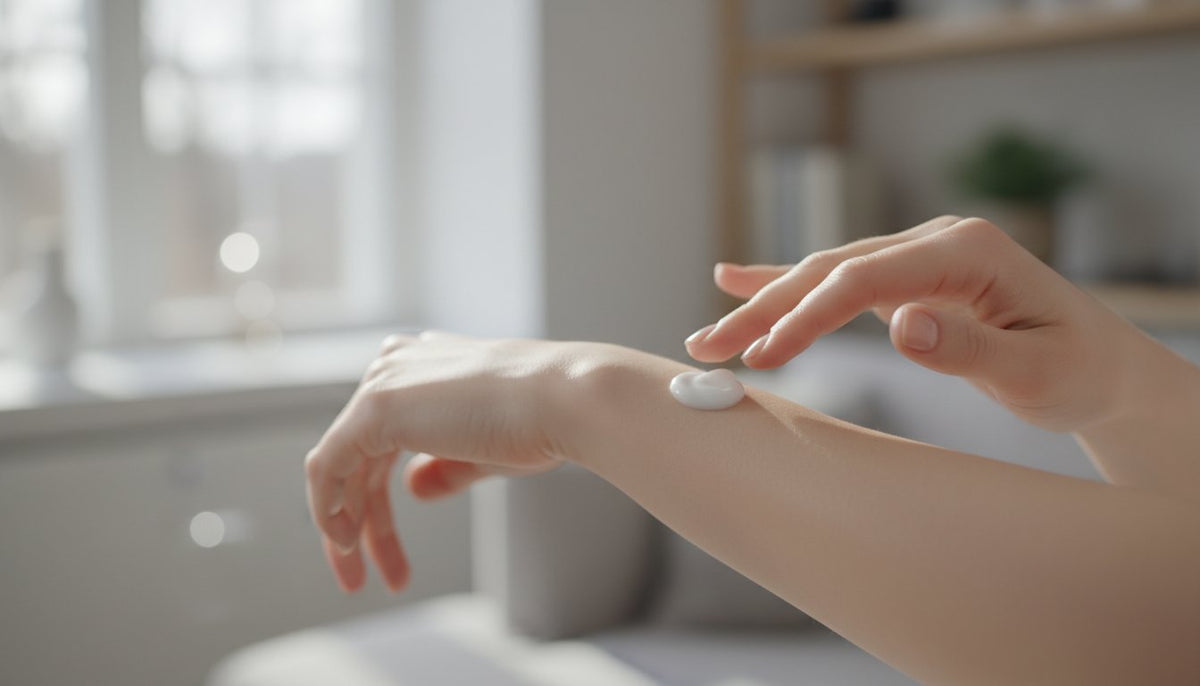
¿Cansada de esa textura persistente y con bultitos en brazos y piernas? ¿Esa que ninguna loción corporal convencional parece suavizar? Si has sentido la frustración de una piel cenicienta y escamosa que se niega a sentirse realmente hidratada, entiendes que el reto no es solo la hidratación: es la renovación de la piel. Aquí es donde la ciencia del cuidado de la piel ofrece una solución elegante y potente. Una crema corporal con urea para piel áspera de alto rendimiento actúa a un nivel completamente distinto, combinando hidratación profunda y exfoliación suave en un solo paso inteligente.
En esta guía descodificamos la ciencia detrás del mecanismo de doble acción único de la urea. Entenderás por qué este activo bioidéntico triunfa donde otros ingredientes fallan, comprenderás el papel crucial de los porcentajes y descubrirás cómo integrar este ingrediente transformador en una rutina corporal fiable y con certificación Ecocert. Prepárate para dejar atrás la confusión y descifrar el código de una piel resistente y visiblemente más suave.
Puntos clave
- Comprende la diferencia biológica entre piel seca y textura áspera para encontrar una solución realmente eficaz para condiciones como la queratosis pilar.
- Descubre la ciencia de doble acción única de la urea, que le permite hidratar en profundidad mientras exfolia la textura irregular.
- Aprende por qué la urea suele ser una opción más suave y eficaz para la piel corporal dañada que los AHA tradicionales como el ácido glicólico.
- Ten claro en qué zonas del cuerpo tiene sentido una crema con urea al 5 % y cuáles son las pocas zonas que piden otra concentración u otro producto.
- Domina técnicas de aplicación sencillas para potenciar el rendimiento de tu crema corporal con urea para piel áspera y lograr una textura resistente.
Entender la piel áspera: más allá de la simple deshidratación
Aunque a menudo se usan indistintamente, la piel “seca” y la piel “áspera” representan dos retos biológicos distintos. La sequedad es un problema de hidratación: falta de agua y de lípidos. La aspereza, en cambio, es un problema de textura: una superficie irregular causada por la acumulación de células muertas. Una barrera cutánea sana e hidratada es lisa y refleja la luz, aportando un brillo luminoso. Una barrera áspera y dañada dispersa la luz, generando una textura apagada, con bultitos y a menudo incómoda.
¿Qué causa esa textura con “bultitos”?
Esa sensación de papel de lija en brazos, muslos o piernas suele ser más compleja que una simple deshidratación. Los principales culpables tienen que ver con cómo se renueva tu piel. Los factores clave incluyen:
- Acumulación de queratina: en condiciones como la queratosis pilar (KP), el exceso de queratina —una proteína estructural— obstruye los folículos pilosos, creando pequeños bultos duros conocidos como “piel de fresa”.
- Renovación celular lenta: con la edad, el proceso natural de desprendimiento de células muertas (descamación) se ralentiza. Esto crea una acumulación de células en la superficie que produce una sensación áspera y escamosa.
- Factores ambientales: el agua dura, rica en minerales, y la baja humedad pueden despojar a la piel de sus aceites naturales, alterando la barrera cutánea y agravando la aspereza.
Por qué tu hidratante actual podría estar fallando
¿Alguna vez te has aplicado una manteca corporal densa y rica solo para descubrir que tu piel sigue áspera debajo? Probablemente has caído en la “trampa oclusiva”. Muchas cremas hidratantes tradicionales abusan de ingredientes oclusivos (como la manteca de karité o la vaselina), diseñados para sellar la hidratación. Aunque son beneficiosos para la piel seca, sobre la piel áspera simplemente forman una película sobre la capa de células muertas, atrapando la textura irregular sin resolverla.
Para alisar de verdad las zonas ásperas, una fórmula debe hacer algo más que hidratar: también debe exfoliar. Aquí es donde los agentes queratolíticos se convierten en una parte innegociable de la rutina corporal moderna. Estos ingredientes inteligentes disuelven suavemente los enlaces que mantienen unidas las células muertas. Una crema con urea bien formulada es un ejemplo perfecto de esta tecnología de doble acción, que ofrece hidratación intensa y exfoliación eficaz. Por eso una crema corporal con urea para piel áspera específica puede triunfar donde las lociones convencionales fracasan: desmonta la barrera de células muertas para que la hidratación penetre en profundidad.
La ciencia de la urea: un activo bioidéntico para una piel suave
Cuando ves la urea en una lista de ingredientes, es fácil malinterpretar su propósito. Lejos de ser un sintético agresivo, la urea es un compuesto natural presente en el propio Factor Natural de Hidratación (NMF) de tu piel. Su función principal es mantener un equilibrio saludable de hidratación y la integridad celular. Lo que la convierte en un ingrediente excepcional es su capacidad única de doble acción: actúa como potente hidratante y como exfoliante suave a la vez. En esencia, la urea es un compuesto bioidéntico que hidrata y exfolia suavemente el estrato córneo, la capa más externa de tu piel, de forma simultánea.
Propiedades humectantes: el imán de la hidratación
Como humectante, la urea actúa como una esponja microscópica, atrayendo la humedad de las capas más profundas de la piel y del ambiente hacia las células resecas de la epidermis. Aunque a menudo se compara con el ácido hialurónico, el menor tamaño molecular de la urea le permite penetrar con mayor eficacia en la piel corporal gruesa y áspera. Esta absorción superior produce un notable efecto “rellenador”, devolviendo elasticidad y flexibilidad a las zonas que más lo necesitan.
Acción queratolítica: el exfoliante suave
La segunda función de la urea es donde ocurre la verdadera magia para las zonas ásperas. En las concentraciones presentes en una crema corporal con urea para piel áspera de calidad, realiza una acción queratolítica. Este proceso que imita a las enzimas, estudiado en profundidad por investigadores en publicaciones como The Science of Urea in Dermatology, le permite disolver los enlaces proteicos que mantienen unidas las células muertas y escamosas. A diferencia de los exfoliantes físicos abrasivos, que pueden causar microdesgarros, la urea exfolia sin fricción, iniciando un ciclo de “revelar y renovar” que acelera la renovación celular saludable y descubre una piel más lisa y sana debajo.
¿Lista para poner la ciencia a trabajar? La Urea Body Cream for Rough Skin de Positine combina un 5% de urea con ácido hialurónico y pantenol para el uso diario en brazos, piernas, codos y rodillas. ¿No sabes qué concentración necesitas? Consulta nuestra guía sobre las concentraciones de la crema de urea.
Urea vs. AHA: cómo elegir el exfoliante adecuado para tu cuerpo
Al abordar la piel áspera y con bultitos, la conversación suele girar hacia los exfoliantes químicos. Los dos principales candidatos para el cuidado corporal son los alfa-hidroxiácidos (AHA) y la urea. Aunque ambos alisan la textura de la piel, sus métodos y efectos son fundamentalmente diferentes. No se trata de que “más ácido dé mejores resultados”, sino de elegir la herramienta adecuada para el reto específico de tu piel.
El enfoque AHA: luminosidad superficial
Los alfa-hidroxiácidos, como el glicólico y el láctico, son fantásticos para disolver el “pegamento” que fija las células muertas a la superficie de la piel. Destacan mejorando problemas superficiales y aportando un brillo radiante. Sin embargo, en la aplicación corporal presentan algunos inconvenientes:
- El “factor escozor”: los AHA pueden causar irritación y picazón, sobre todo en piel con la barrera comprometida o con microdesgarros del afeitado o la depilación.
- Sensibilidad al sol: aumentan significativamente la fotosensibilidad, haciendo innegociable la aplicación rigurosa de protector solar en todo el cuerpo.
- Acción superficial: aunque son eficaces contra el apagamiento general, a los AHA les suele costar penetrar y ablandar las zonas más gruesas y rebeldes de rodillas, codos y talones.
Si tienes curiosidad por saber cómo actúan los AHA en un formato controlado y preciso, lee nuestra guía profesional sobre el concentrado de peeling con AHA.
La ventaja de la urea: resistencia profunda
La urea es un compuesto único que pertenece a la clase de agentes conocidos como queratolíticos. A diferencia de los AHA, ofrece un potente beneficio de doble acción: exfolia e hidrata intensamente. En concentraciones bajas actúa como humectante, atrayendo la hidratación hacia la piel. En concentraciones más altas (las de una crema corporal con urea para piel áspera de calidad), descompone el exceso de queratina que causa las zonas ásperas y los bultitos. Esta doble función cambia las reglas del juego para la resistencia de la piel. Una revisión exhaustiva sobre The Science of Urea in Skincare de los NIH confirma su capacidad única para hidratar mientras disuelve eficazmente la matriz de células muertas.
Esto convierte a la urea en el estándar de oro para gestionar condiciones como la queratosis pilar (KP) y la piel muy seca. Alisa la textura sin el escozor habitual de los ácidos y ayuda activamente a fortalecer la barrera cutánea con el tiempo, siendo la opción superior para un uso constante durante todo el año sin la mayor fotosensibilidad de los AHA.
Aunque algunas rutinas avanzadas alternan un gel de ducha con AHA y una crema con urea, para quienes buscan una única solución altamente eficaz, la elección es clara. Para una mejora específica y a largo plazo de la piel áspera y dañada, una crema corporal con urea para piel áspera dedicada ofrece una solución más estratégica, suave y profundamente reparadora.
La rutina corporal moderna: cómo maximizar la eficacia de la urea
Hacerte con una crema de urea de alto rendimiento es el primer paso. Sin embargo, liberar todo su potencial requiere un protocolo de aplicación estratégico. Al optimizar tu rutina, transformas una simple crema hidratante en una solución específica para una piel suave y resistente. Es como actualizar el sistema operativo de tu cuidado corporal de básico a alta eficiencia.
Una rutina eficaz se basa en cuatro principios fundamentales diseñados para el máximo impacto:
- Paso 1: limpieza estratégica. Elimina de tu ducha los limpiadores agresivos con sulfatos (SLS/SLES). Estos despojan a la piel de su Factor Natural de Hidratación (NMF), creando un déficit de hidratación contra el que tu crema tendrá que luchar. Opta por fórmulas suaves y de pH equilibrado que limpien sin comprometer tu barrera cutánea.
- Paso 2: el momento óptimo. Aplica tu crema corporal con urea para piel áspera en los tres minutos posteriores a la ducha. Esta “ventana dorada” es cuando tu piel aún está húmeda y más permeable, permitiendo que la fórmula selle la hidratación superficial y penetre más profundamente.
- Paso 3: capas inteligentes. Amplifica los resultados combinando la urea con activos específicos. Un sérum de niacinamida aplicado antes puede reforzar aún más la barrera cutánea y unificar el tono, creando una poderosa sinergia para la textura y el aspecto.
- Paso 4: constancia. Tratar la piel áspera y queratinizada es una maratón, no un sprint. El uso esporádico es insuficiente. La aplicación diaria y constante es el requisito innegociable para controlar de forma continua la acumulación de queratina y mantener la suavidad.
Técnicas de aplicación para una absorción máxima
En las zonas rebeldes y de alta fricción, como codos, rodillas y talones, dedica un minuto extra a masajear la crema para estimular la circulación y la absorción. Para acelerar la reparación de zonas muy agrietadas o ásperas, usa tu crema de urea como “mascarilla” intensiva nocturna: aplica una capa más gruesa en la zona y cúbrela con calcetines o mangas de algodón para crear un ambiente oclusivo que potencia la eficacia de la fórmula.
Capas y compatibilidad
Aunque la urea y la niacinamida son un equipo de ensueño, conviene ser prudente al introducir otros activos potentes. Puedes usar urea con retinoles corporales, pero recomendamos alternar las noches o aplicarlos en zonas distintas del cuerpo para evitar la sobreexfoliación. Por último, un pequeño ajuste de estilo de vida puede marcar una gran diferencia: baja la temperatura de tu ducha. El agua demasiado caliente elimina los lípidos protectores, agravando la aspereza y socavando toda tu rutina.
Construye tu rutina con Positine: empieza con la Urea Body Cream for Rough Skin para el alisado diario, o elige la 5% Urea + 2% Panthenol Body Cream si tu piel es muy seca o propensa a la irritación y necesita un extra de calma.
¿En qué zonas del cuerpo puedes usar la crema con urea?
Respuesta corta: en casi cualquier zona donde la piel se note áspera, seca o con bultitos. Unas pocas zonas necesitan una concentración mayor —o directamente otro producto—. Usa la tabla como referencia rápida y luego lee el detalle.
| Zona | ¿Crema corporal con urea al 5 %? | Qué esperar |
|---|---|---|
| Brazos, muslos y piernas | Sí, a diario | La zona clásica de la textura áspera y con bultitos, la “piel de fresa” |
| Codos y rodillas | Sí, a diario | Piel más gruesa; masajea un minuto extra |
| Manos | Sí | Reaplica después de lavarlas: las manos pierden hidratación más rápido |
| Ingle y piernas tras el afeitado | Sí | Ayuda a mantener los folículos despejados y a reducir los vellos encarnados |
| Pies y talones | Sí, para la sequedad diaria | Los talones muy gruesos y con callosidades suelen pedir una concentración mayor (10–40 %) |
| Rostro | No: usa una crema facial | Las texturas corporales son más ricas y pueden obstruir los poros del rostro |
Brazos, piernas y la “piel de fresa”
La parte superior de los brazos y los muslos es donde la acumulación de queratina se nota más, y son las zonas más fáciles de tratar con constancia porque puedes aplicar la crema nada más salir de la ducha. Trabaja la crema hasta que desaparezca, en lugar de dejar una capa sobre la superficie, y dale de dos a cuatro semanas de uso diario antes de juzgar el resultado: la urea actúa de forma progresiva, no de la noche a la mañana.
Codos, rodillas, manos y talones
Son zonas de mucha fricción y piel más gruesa, y se comportan de forma distinta al resto del cuerpo. Codos, rodillas y manos responden bien a una crema con urea al 5 % de uso diario, y las manos son las que más reaplicación necesitan, sencillamente porque el lavado la retira. Los talones son la excepción: una crema al 5 % es un buen paso de mantenimiento diario para la sequedad general, pero la piel del talón realmente gruesa y callosa suele pedir una concentración más alta. Nuestra guía sobre las concentraciones de la crema de urea explica en qué se diferencian el 5 %, el 10 %, el 20 % y el 40 % y a qué zona corresponde cada una.
Ingle y después del afeitado
Como la urea afloja las células muertas que pueden atrapar el vello mientras crece, es una opción sensata para el día a día en zonas propensas a los vellos encarnados, como la ingle y las piernas. Dos notas prácticas: aplícala los días entre afeitados, no sobre piel recién afeitada e irritada, y suspende su uso si la zona escuece o se ve inflamada. Una fórmula sin perfume es la opción más segura para esta zona: la 5% Urea + 2% Panthenol Body Cream combina urea con pantenol, que ayuda a calmar y a apoyar la barrera cutánea.
Urea para estrías y piel de aspecto acartonado: qué puede y qué no puede hacer
Conviene ser claros. La urea es un humectante y un queratolítico: atrae hidratación y afloja las células muertas de la superficie. Eso mejora de verdad cómo se siente y cómo refleja la luz una piel seca, áspera o de aspecto acartonado, y una piel bien hidratada se ve más lisa y flexible. Lo que la urea no hace es eliminar las estrías ni modificar los cambios estructurales del colágeno y la elastina que hay debajo. Cualquier producto que prometa borrar las estrías solo con urea está exagerando. Úsala por confort, suavidad y textura, y ajusta tus expectativas.
Una advertencia que vale para todas las zonas anteriores: si una zona áspera duele, está agrietada, sangra, se extiende o simplemente no mejora tras varias semanas de cuidado constante, consulta a tu médico o a un dermatólogo en lugar de seguir tratándola por tu cuenta. Los cambios persistentes en la piel merecen una opinión profesional.
La crema corporal con urea de Positine: el estándar de la belleza limpia
En Positine Cosmetics diseñamos soluciones donde eficacia y pureza no son excluyentes. Nuestra elección de formular con una urea de origen vegetal y certificada por Ecocert fue deliberada. Creemos que los resultados más potentes provienen de ingredientes que trabajan en armonía con la biología natural de tu piel, no contra ella. Este enfoque nos permite ofrecer una crema corporal con urea para piel áspera de alto rendimiento que respeta tanto tu cuerpo como el medio ambiente.
La verdadera innovación reside en la sinergia de nuestra formulación. La urea actúa como potente queratolítico y humectante, disolviendo suavemente la acumulación de piel áspera mientras atrae una hidratación profunda. La hemos combinado con ácido hialurónico, pantenol calmante y sodium PCA: aliados que fijan la humedad, ayudan a reponer el Factor Natural de Hidratación de la piel, sellan la hidratación y restauran la flexibilidad. El resultado es un sistema integral de restauración de la piel.
Nuestro compromiso con la “belleza limpia” es inquebrantable. Nunca encontrarás fragancias sintéticas, parabenos ni conservantes agresivos en nuestros productos. Esta filosofía está profundamente influida por nuestra herencia estonia: una cultura arraigada en un profundo respeto por la resiliencia de la naturaleza. Queremos construir esa misma resiliencia en tu piel, fomentando la salud y el equilibrio a largo plazo.
Certificación Ecocert: qué significa para tu piel
Un sello Ecocert es más que una etiqueta: es una garantía de integridad y rendimiento. Significa que nuestra formulación cumple rigurosos estándares globales de cosmética natural y orgánica. Esto implica:
- Pureza de los ingredientes: un mínimo del 95% de los ingredientes es de origen natural, garantizando una fórmula limpia y compatible con la piel.
- Prácticas sostenibles: desde el abastecimiento responsable de materias primas hasta un packaging respetuoso con el medio ambiente y envíos a todo el mundo.
- Eficacia probada: “limpio” no significa “débil”. Ofrecemos resultados de nivel profesional, demostrando que los ingredientes de origen natural pueden ser excepcionalmente potentes.
La diferencia Positine: más allá del envase
Nuestro objetivo final es construir la salud de la piel a largo plazo. Diseñamos cada producto, incluida nuestra especializada crema corporal con urea para piel áspera, para que sea lo bastante suave para pieles sensibles y lo bastante potente para lograr una transformación visible. Nos centramos en restaurar la función barrera de tu piel, logrando un brillo radiante y suave que perdura. Este es el núcleo de la filosofía Positine: cuidado de la piel inteligente y centrado en las personas para resultados duraderos. Experimenta la transformación con la crema corporal con urea de Positine.
Transforma tu textura: la solución inteligente para una piel resistente
El camino hacia una piel suave y confortable ya no es cuestión de adivinar. Como hemos visto, la textura áspera surge de una compleja interacción entre deshidratación y renovación celular comprometida. La solución no está en los exfoliantes agresivos, sino en aprovechar el poder bioidéntico de la urea para trabajar en armonía con los procesos naturales de tu piel, aportando hidratación profunda y exfoliación suave a la vez.
Por eso una crema corporal con urea para piel áspera formulada científicamente es la mejora definitiva de tu rutina corporal. Positine eleva este esencial con una fórmula que restaura la barrera de tu piel y revela una superficie profundamente resistente. Tu camino hacia una piel profundamente suave y resistente está a un solo paso. Con ingredientes naturales certificados por Ecocert, una fórmula dermatológicamente testada en piel sensible y envíos a todo el mundo desde Estonia, la solución inteligente está a tu alcance. Compra hoy la crema corporal con urea para piel áspera de Positine y siente la ciencia de la suavidad.
Preguntas frecuentes sobre la crema corporal con urea
¿Es segura la crema corporal con urea para el uso diario en piel sensible?
Absolutamente. La urea es un componente del Factor Natural de Hidratación (NMF) de tu piel, por lo que se tolera excepcionalmente bien, incluso en pieles sensibles. Para el uso diario, recomendamos empezar con una formulación con un 5-10% de urea para evaluar la respuesta de tu piel. Como con cualquier activo nuevo, realizar una prueba de parche en una zona pequeña es un paso inteligente y estratégico para asegurar una compatibilidad óptima y prevenir posibles irritaciones antes de la aplicación completa.
¿Puedo usar la crema corporal con urea en la cara para zonas ásperas?
Aunque es técnicamente posible para zonas muy secas y localizadas, en general desaconsejamos usar cremas corporales en el rostro. Las formulaciones corporales suelen ser más densas y oclusivas, lo que podría obstruir los poros de la delicada piel facial. Para la aspereza facial, busca una crema hidratante formulada específicamente para el rostro con una concentración más baja de urea (normalmente inferior al 10%) para una solución más elegante y no comedogénica en esa zona.
¿Cuánto tarda la urea en dar resultados con la queratosis pilar?
Puedes esperar una mejora notable en la suavidad e hidratación de la piel durante la primera semana de uso constante. Para una reducción visible de los bultitos asociados a la queratosis pilar (KP), normalmente se necesitan entre dos y cuatro semanas de aplicación diaria. La clave del éxito es la constancia, ya que la urea actúa de forma progresiva exfoliando los tapones de queratina y alisando la superficie de la piel. El uso a largo plazo ofrece los resultados más estables y eficaces.
¿Qué porcentaje de urea es mejor para la piel áspera y con bultitos?
Para el cuidado corporal diario —incluida la piel sensible—, una crema con un 5% de urea es el punto óptimo bien tolerado: suficiente para hidratar en profundidad y disolver suavemente la acumulación áspera y escamosa con un uso diario constante. Las zonas muy gruesas y callosas, como los talones, pueden beneficiarse de concentraciones más altas (10–20%), que actúan más rápido sobre la piel dura pero pueden resultar más agresivas en la piel normal. Si estás valorando tus opciones, consulta nuestra guía completa sobre las concentraciones de crema de urea —5%, 10%, 20% o 40%— explicadas.
¿La urea en cosmética es vegana y libre de crueldad animal?
Sí, la urea utilizada en la cosmética moderna es totalmente sintética y creada en laboratorio, por lo que es vegana y libre de crueldad animal. No se obtiene de fuentes animales. Esta versión sintética es químicamente idéntica a la urea presente de forma natural en tu piel, lo que garantiza una alta pureza, estabilidad y eficacia en las formulaciones cosméticas. Puedes usar con confianza productos con urea sintética sin comprometer tus estándares éticos sobre el bienestar animal.
¿La crema corporal con urea ayuda con los vellos encarnados?
Una crema corporal con urea para piel áspera puede ser una herramienta muy eficaz para prevenir los vellos encarnados. Sus propiedades queratolíticas (exfoliantes) ayudan a disolver suavemente la capa de células muertas que puede atrapar los folículos pilosos, permitiendo que el vello crezca libremente en lugar de curvarse hacia el interior de la piel. El uso regular en zonas propensas, como la línea del bikini o las piernas, ayuda a mantener una superficie lisa y reduce significativamente la aparición de estos dolorosos bultitos.
¿Cuál es la diferencia entre la urea sintética y la urea natural?
En el contexto de la cosmética, la “urea sintética” es el estándar de la industria. Se produce en un entorno de laboratorio controlado para ser excepcionalmente pura, estable y eficaz. La “urea natural” hacía referencia históricamente a la urea derivada de la orina animal, una fuente que ya no se utiliza en la cosmética moderna por razones de seguridad y ética. La versión sintética es químicamente idéntica a la urea que produce tu cuerpo, lo que la convierte en la opción superior y fiable para todas las formulaciones.
¿Puedo usar crema con urea durante el embarazo o la lactancia?
La urea se considera generalmente segura para uso tópico durante el embarazo y la lactancia, ya que su absorción sistémica es muy baja. Sin embargo, cada embarazo es único y los cambios hormonales pueden afectar a la sensibilidad de la piel. Siempre abogamos por priorizar la seguridad. Es esencial consultar con tu médico o dermatólogo antes de introducir cualquier producto activo nuevo en tu rutina durante esta etapa, para asegurarte de que es la opción adecuada para ti.
Compartir:
Concentrado peeling con AHA: la guía profesional para una exfoliación de precisión
La ciencia de lo limpio: cómo elegir la mejor crema hidratante facial limpia en 2026