

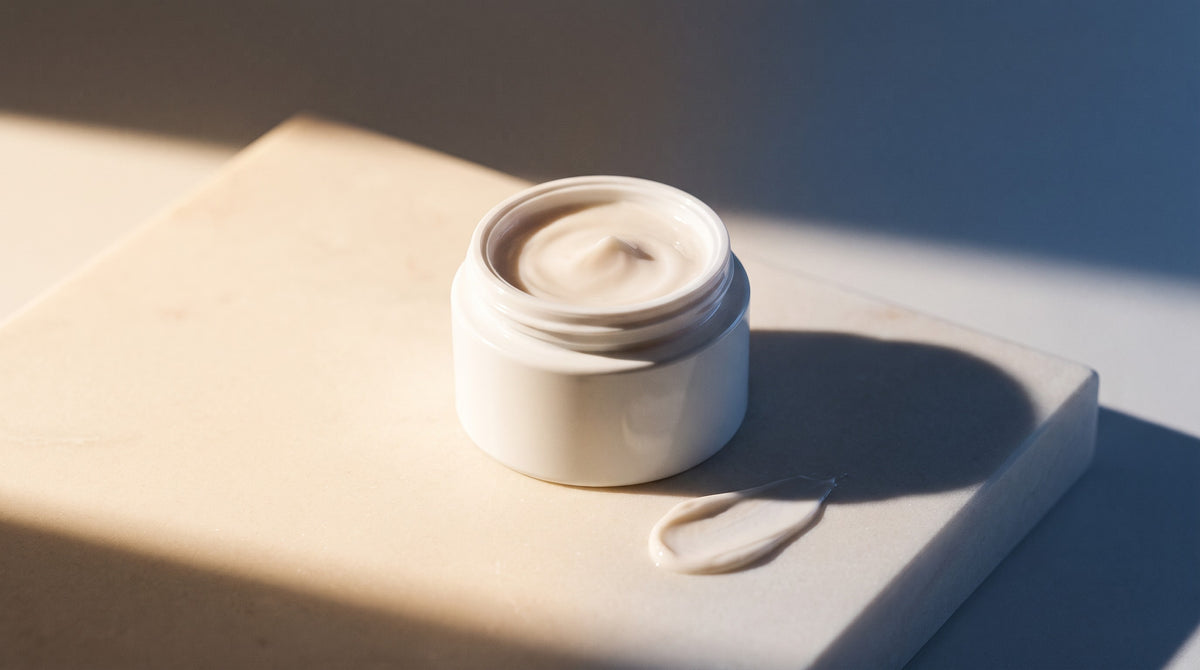
Peptide creams have moved from niche to mainstream, and "peptide moisturiser" now sits on almost every anti-ageing shelf. But what does a peptide cream actually do, how is it different from retinol, and does it matter whether you apply it in the morning or at night? Here is a clear, evidence-aware guide.
What are peptides in skincare?
Peptides are short chains of amino acids — the same building blocks that make up proteins such as collagen and elastin. In cosmetics, "peptides" is an umbrella term: different peptides are designed for different jobs. They are often grouped as signal peptides, carrier peptides and neurotransmitter-inhibiting peptides.
That is why "do peptides work?" has no single answer. Results depend on which peptide is used, at what level, and how well the finished formula delivers it. A label that simply says "with peptides" tells you less than the full ingredient list does.
What does a peptide cream do?
A well-formulated peptide cream is primarily a moisturiser with an extra, targeted role. Realistically, you can expect it to:
- Support the look of firmer, smoother skin — the main reason peptides are used in anti-ageing formulas.
- Soften the appearance of fine lines, especially lines made more visible by dryness.
- Hydrate and condition the skin, because peptides are usually paired with humectants and emollients in a cream base.
What a cosmetic peptide cream will not do is replace professional treatments or reverse ageing. Think of it as steady, gentle, long-term care — results build with consistent use over several weeks.
Peptides vs retinol: what's the difference?
| Peptides | Retinol | |
|---|---|---|
| What it is | Short amino-acid chains | A form of vitamin A |
| Main role | Firmer-looking, smoother, hydrated skin | Faster cell turnover, visible smoothing of lines and texture |
| Tolerance | Generally gentle | Can cause dryness, redness and flaking, especially at first |
| When to use | Morning and/or evening | Usually evening only, with daily SPF |
Retinol has the longer research track record for visible signs of ageing, but many people find it hard to tolerate. Peptides are a gentler option and can also be used alongside a retinoid — for example, a peptide cream in the morning and retinol at night. If you prefer a plant-based approach, read our guide to bakuchiol vs retinol.
Peptides and hyaluronic acid: why they work well together
Hyaluronic acid is a humectant: it helps the skin hold on to water, giving an immediately plumper, more comfortable look. Peptides work on a longer timescale, supporting the look of firmness and smoothness. Together they cover both needs — instant hydration and gradual improvement — which is why the pairing is so common in peptide moisturisers.
Should you use a peptide cream in the morning or at night?
Both work. Unlike retinol, peptides are generally suitable for daytime use, so a peptide cream can be applied morning and evening. What matters most is consistency: a cream used twice a day, every day, will do more than an intensive product used occasionally.
- Morning: cleanse, apply serum if you use one, then peptide cream, then broad-spectrum SPF.
- Evening: cleanse, apply serum or your treatment step, then peptide cream to finish.
How to use a peptide cream
- Start with clean skin.
- Take a pea-sized amount and smooth it over the face and neck.
- In the morning, let it absorb briefly, then follow with sunscreen.
- Give it time — assess results after at least four to eight weeks of regular use.
Patch test any new product first, especially if your skin is reactive.
How to choose the best peptide moisturiser
- Check the ingredient list for named peptides rather than relying on front-of-pack claims.
- Look for supporting hydrators such as hyaluronic acid, glycerin or sodium PCA.
- Match the texture to your routine — a lightweight cream is easier to wear under SPF and makeup.
- Consider certifications (for example natural or vegan) if they matter to you.
A peptide cream for day and night: Positine Peptide Ageless AM/PM Cream
Our Peptide Ageless AM/PM Cream is a peptide moisturiser made for morning and evening use. It combines Hexapeptide-11 and Dipalmitoyl Hydroxyproline to support the look of firmer, smoother skin with two molecular weights of hyaluronic acid (hydrolyzed hyaluronic acid and sodium hyaluronate), sodium PCA, glycerin and jojoba seed oil for lasting moisture, plus vitamin E and a vitamin C ester for antioxidant support.
The texture is lightweight and absorbs cleanly, so it sits well under SPF in the morning and feels comfortable at night. It is Ecocert COSMOS Natural certified and vegan. It is lightly fragranced, so patch test if your skin is reactive.
Want a more concentrated peptide step? Layer SkinLift Peptide Complex serum underneath, add the Peptide Age-Defying Eye Cream for the eye area, or choose the full Anti-Age Peptide Collection. For a broader look at newer actives, see PDRN vs peptides vs exosomes.
Frequently asked questions
What does peptide cream do for your face?
A peptide cream moisturises the skin and supports the look of firmer, smoother skin, softening the appearance of fine lines with regular use.
Can I use peptides every day?
Yes. Peptides are generally gentle and suitable for daily use, morning and evening.
Can I use peptides with retinol?
Generally, yes. Many people use a peptide cream in the morning and retinol at night, or apply a peptide moisturiser after retinol to support comfort.
Can I use peptides with vitamin C?
Yes, they can be used in the same routine. Apply your vitamin C serum first, then a peptide cream, and finish with SPF in the morning.
How long does a peptide cream take to work?
Hydration is noticeable right away; changes in how firm and smooth skin looks usually take several weeks of consistent use.
This article is for general information only. If you have a skin condition or concerns about a product, consult a dermatologist or healthcare professional.
Share:
How Long Does Hair Color Last — and Why It Fades So Fast