

Retinol has long held the spotlight in anti-ageing skincare thanks to its remarkable ability to boost collagen, smooth out fine lines, and refine skin texture. But for all its benefits, retinol also comes with a catch — it is known to cause irritation, dryness, and sensitivity, especially for those with reactive or delicate skin types. That’s where bakuchiol comes in.
This gentle, plant-based ingredient offers similar visible results to retinol — reducing the look of wrinkles and improving skin tone — without the harsh side effects. That is why it has become a fixture in modern skincare products.
In this guide, we’ll explore what bakuchiol is, how bakuchiol works on your skin, its ageing benefits, and how to easily incorporate it into your routine.
What Is Bakuchiol?
Bakuchiol (pronounced buh-koo-chee-all) is a naturally occurring antioxidant derived from the seeds and leaves of the Psoralea corylifolia plant, also known as babchi. Traditionally used in Ayurvedic and Chinese medicine, bakuchiol has gained modern skincare fame as a natural alternative to retinol — smoothing fine lines, supporting firmness, and evening out skin tone, while being exceptionally well tolerated by sensitive skin.
Unlike traditional retinoids, bakuchiol is non-irritating and non-sensitising for most skin types, and it does not increase sun sensitivity. It is also often discussed as an option for people advised to avoid retinoids, such as during pregnancy or breastfeeding — though any skincare choice during pregnancy should always be confirmed with your doctor or midwife.
As an antioxidant, bakuchiol also helps defend the skin against free radicals — the unstable molecules generated by UV exposure and pollution that contribute to premature skin ageing.
How Does Bakuchiol Work?
Bakuchiol is not chemically related to vitamin A, yet studies show it influences similar skin-renewal pathways to retinol. It supports the skin’s natural cell turnover and collagen production, which is why regular use is associated with smoother texture, better elasticity, and a more even tone — the classic ageing benefits people look for in a retinoid, achieved through a gentler route.
Bakuchiol vs. Retinol: What’s the Difference?
The short version: retinol typically delivers faster, more dramatic change but brings dryness, flaking, and sun sensitivity; bakuchiol works more gradually, suits sensitive skin, and can be used morning and evening. The right choice depends on your skin type, tolerance, and routine.
We’ve written a full side-by-side breakdown in our dedicated guide: Bakuchiol vs Retinol: What’s the Difference, and Which Should You Choose?
The Skin Benefits of Bakuchiol
Bakuchiol isn’t just a gentler substitute for retinol — it is a well-rounded active in its own right. Its standout benefits:
- Reduces the appearance of fine lines and wrinkles by supporting collagen production
- Improves skin firmness and elasticity, making the skin look and feel more youthful
- Brightens uneven skin tone and helps fade the look of dark spots over time
- Soothes redness and irritation, especially helpful for reactive skin
- Protects against environmental stress thanks to antioxidant activity that helps neutralise free radicals
It benefits nearly all skin types and works especially well in routines focused on ageing gracefully, reducing sensitivity, or supporting barrier health.
How to Use Bakuchiol in Your Skincare Routine
Bakuchiol is easy to work into your existing ritual. Because it is non-irritating and doesn’t increase sun sensitivity, it can be used morning and night — unlike traditional retinol, which is usually reserved for evening use.
Recommended routine:
- Cleanse with our Sensitive Skin Oil-To-Milk Cleanser
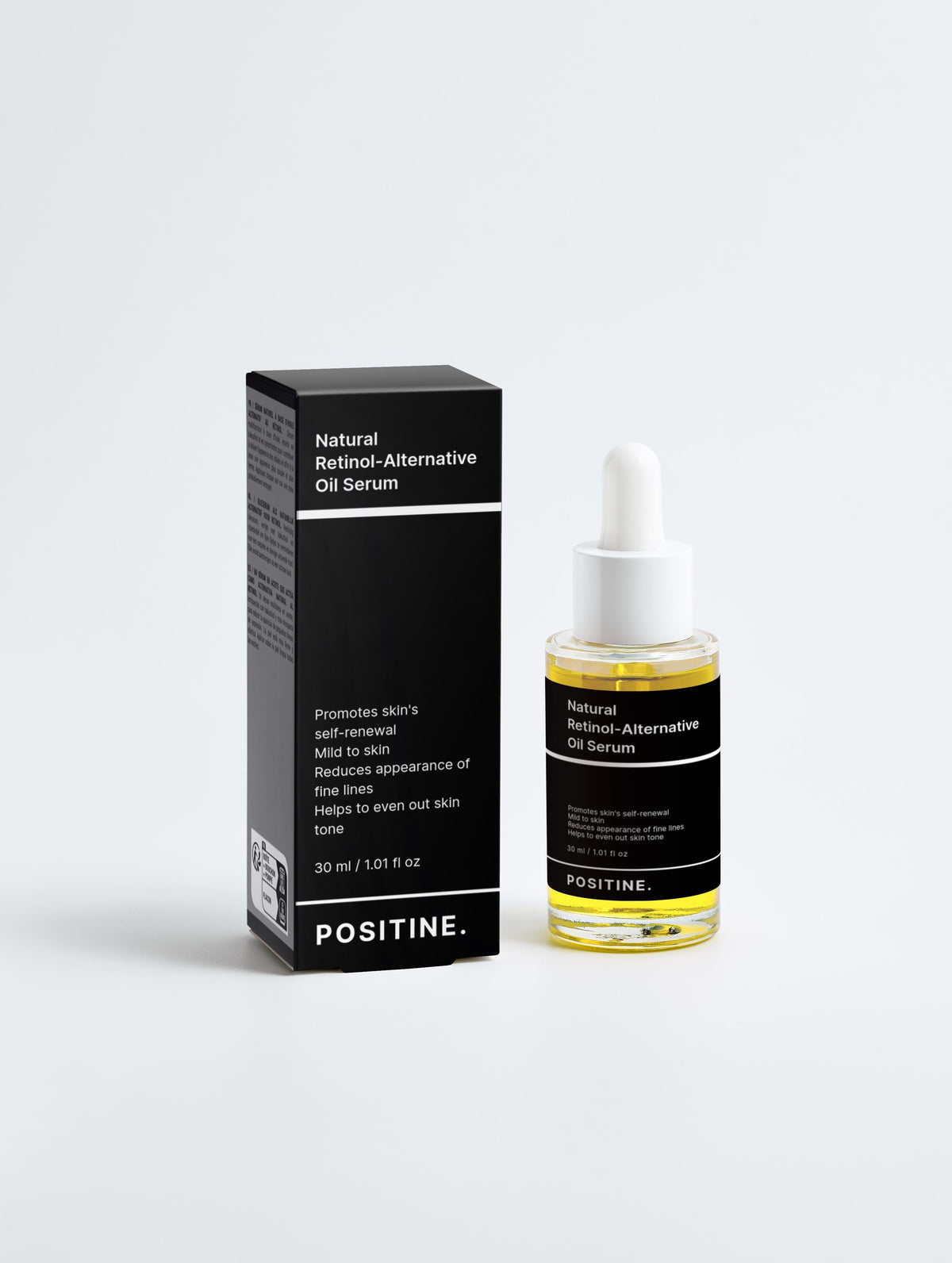
- Apply our Natural Retinol-Alternative Oil Serum with Bakuchiol
- Follow with the Ceramide Hydrating Night Cream for deeper overnight repair
- Optional: smooth the Retinol Alternative Eye Serum around the delicate eye area
Bakuchiol also plays well with other actives like hyaluronic acid, vitamin C, niacinamide, and ceramides, making it a team player in a well-rounded routine.
Beyond Bakuchiol: Other Plant-Based Retinol Alternatives
Bakuchiol isn’t the only botanical route to retinol-like results. Bidens pilosa extract is another plant-based retinol alternative used in modern formulas: it supports the appearance of smoother texture, refined skin tone, and reduced fine lines while maintaining skin comfort — and it is designed for daily, uninterrupted use, even on sensitive or reactive skin.
You’ll find it in our Ecocert-certified Retinol Alternative Serum, which pairs Bidens pilosa with hyaluronic acid, vitamin C and vitamin E for hydration and antioxidant support. If you prefer a water-light serum texture over a facial oil, this is the one to reach for.
To carry the same active into your cream step, the Retinol Alternative Moisturiser combines Bidens pilosa with hyaluronic acid, sodium PCA, aloe juice and jojoba oil. It is a lightweight, Ecocert COSMOS Natural certified moisturiser made for consistent daily use on all skin types — apply it after the serum, preferably in the evening.
Is Bakuchiol Right for You?
If you’ve experienced irritation from retinol, have dry or sensitive skin, or simply prefer plant-based skincare products, bakuchiol is a smart and effective choice. It is also a great option if you want:
- A gentle introduction to anti-ageing ingredients
- A simplified routine with multitasking benefits
- To avoid the dryness or peeling often caused by retinoids
- An active you can use during the day as well as at night
Bakuchiol is especially popular with people in their 20s and 30s looking to prevent early signs of ageing, and with anyone 40+ seeking smoother, firmer-looking skin without irritation.
If you have a diagnosed skin condition or are unsure whether an active suits you, speak to a pharmacist, dermatologist or other healthcare professional before starting.
Ready to Make the Switch?
Say goodbye to irritation and hello to glow. Our Natural Retinol-Alternative Oil Serum is powered by bakuchiol and enriched with nourishing botanical oils that leave your skin soft, smooth, and visibly revitalised.
It’s everything you love about retinol — minus the compromise.
Share:
Why Hydration Is the Foundation of Great Skin: Dehydrated vs Dry Skin