

PDRN vs Peptides vs Exosomes: What Does Your Skin Actually Need?
PDRN, peptides and exosomes are often discussed as the next generation of skincare, but they are not interchangeable—and newer does not automatically mean better. For most people, the useful question is not which ingredient sounds most advanced? but which ingredient has evidence, a suitable formulation and a clear role in my routine?
PDRN and exosomes are attracting considerable attention in aesthetic skincare. Peptides, meanwhile, belong to a more established cosmetic ingredient category, although the evidence still varies substantially from one peptide and formulation to another.
Here is how the three compare—and what actually deserves priority if you want a sensible skincare routine after 35.
PDRN vs Peptides vs Exosomes at a Glance
| PDRN | Peptides | Exosomes | |
|---|---|---|---|
| What it is | DNA-derived polymer fragments | Short chains of amino acids | Tiny extracellular vesicles involved in cell-to-cell communication |
| Main cosmetic purpose | Used in products positioned around skin renewal and improved skin appearance | Used for concerns including the appearance of fine lines, firmness and skin conditioning | Used in emerging products positioned around skin renewal and appearance |
| Evidence maturity | Emerging, especially for topical cosmetics | More established, but highly ingredient- and formulation-dependent | Early and rapidly developing |
| Typical product types | Serums, creams and professional aesthetic products | Serums, creams, eye products and moisturisers | Serums and products associated with professional aesthetic procedures |
| Advantages | Interesting emerging research | Wide formulation experience and relatively accessible for everyday skincare | Scientifically interesting area with growing research |
| Limitations | Topical evidence is still limited and formulation-specific | Not every peptide has equally strong human evidence; delivery matters | Limited standardisation and relatively little high-quality human evidence |
| Who may be interested | People following emerging skincare technologies | People wanting an established cosmetic ingredient category that fits easily into a routine | People interested in newer aesthetic technologies who understand the current uncertainties |
What Is PDRN in Skincare?
PDRN, or polydeoxyribonucleotide, is made from DNA-derived polymer fragments. It has a history of research in regenerative and medical contexts, but evidence for topical cosmetic PDRN is considerably newer and should not be confused with evidence for injected or medically used formulations.
PDRN has become one of the most talked-about ingredients in Korean and regenerative-inspired skincare. Search interest has grown alongside treatments and products marketed around “skin regeneration,” sometimes making PDRN sound like an entirely new solution to skin ageing.
The reality is more nuanced.
Research into PDRN and related polynucleotides is developing, including clinical studies involving skin applications. However, the evidence base is still relatively small, and results from a specific formulation or professional procedure cannot automatically be applied to every PDRN serum or cream.
For topical skincare, practical questions matter: What form of PDRN is being used? At what concentration? How is it formulated? How effectively does the finished formula deliver it where needed?
A product containing a fashionable ingredient is not automatically an effective product.
What Are Peptides?
Peptides are short chains of amino acids used in skincare for several cosmetic purposes, including supporting firmer-looking skin and reducing the appearance of fine lines. They are a more established cosmetic ingredient category than topical PDRN or exosome skincare, although effectiveness depends on the specific peptide and formulation.
“Peptides” is an umbrella term rather than one single ingredient.
Different cosmetic peptides are designed for different functions. Depending on their structure, they may be described as signal peptides, carrier peptides or neurotransmitter-inhibiting peptides, among other categories.
This is important because asking “Do peptides work?” is a little like asking “Do vitamins work?” The answer depends on which one, at what concentration, in what formulation and for what purpose.
Systematic reviews of cosmeceuticals have found a meaningful body of evidence behind peptides, while newer reviews also highlight an important limitation: results are not uniform across all peptide products, and some peptides face skin-delivery challenges.
So are peptides proven for skincare?
Some cosmetic peptides have useful supporting evidence, and peptides as a category have been studied more extensively in conventional topical skincare than PDRN or exosome cosmetics. But “contains peptides” alone is not proof that a particular product will deliver a specific result.
That distinction is worth remembering whenever a label makes an ingredient sound more powerful than the finished formula has demonstrated.
What Are Exosomes?
Exosomes are microscopic extracellular vesicles involved in communication between cells. Their potential in dermatology is scientifically interesting, but exosome skincare remains an emerging field with significant questions around sourcing, manufacturing, standardisation, stability and clinical evidence.
Exosomes naturally carry biological materials between cells. That communication function is one reason researchers are interested in their potential applications.
It is also one reason the term has become commercially attractive.
The difficulty is that “exosome skincare” is not necessarily one consistent technology. Research reviews have highlighted differences in exosome sources, isolation and manufacturing methods, while commercial product information may not always make those distinctions easy for consumers to understand.
There is another important distinction: cosmetic products marketed with exosome terminology should not be confused with approved medical treatments.
Current reviews of human studies report encouraging early findings in areas of aesthetic dermatology, but they also repeatedly call for larger, better-controlled trials and stronger standardisation.
Are exosomes in skincare worth it?
At present, it is reasonable to be interested—but equally reasonable to be cautious.
A premium price and futuristic terminology do not establish that an exosome cosmetic will outperform a well-formulated conventional routine.
PDRN vs Peptides: What’s the Difference?
PDRN and peptides are fundamentally different materials. Peptides are amino-acid chains with a comparatively established history in cosmetic formulation, while PDRN consists of DNA-derived fragments and has a newer evidence base in topical skincare.
So, PDRN vs peptides: which is better?
There is no scientifically responsible universal winner.
If you are asking which category currently has the longer track record in everyday cosmetic skincare, peptides have the advantage. They have been incorporated into topical formulations for years and studied across numerous cosmetic applications.
PDRN is interesting precisely because it represents a newer direction. But novelty also means more unanswered questions, particularly when moving from research involving procedures or specialised formulations to an ordinary cream or serum.
Choosing between them should therefore depend on the finished product and your skincare priorities—not on which ingredient is receiving more attention on social media.
PDRN vs Exosomes: What’s the Difference?
PDRN is composed of DNA-derived polymer fragments, whereas exosomes are extracellular vesicles capable of carrying biological molecules. They come from different scientific categories and should not be treated as alternative names for the same regenerative technology.
Both have become associated with the language of skin renewal, which can make them appear similar from a consumer perspective.
Scientifically, they are quite different.
PDRN research involves defined DNA-derived materials. Exosome research deals with biological vesicles whose characteristics can vary depending on their source and how they are produced and processed.
Both fields have interesting research behind them. Both also require more careful interpretation when claims move from laboratory, medical or procedure-based contexts into over-the-counter cosmetics.
Peptides vs Exosomes
Peptides currently make more straightforward sense as conventional skincare ingredients. Exosomes represent a newer and more complex technology for which cosmetic evidence and manufacturing standards are still developing.
That does not mean exosomes will prove unimportant.
It means consumers should distinguish potential from established everyday usefulness.
Peptides can be formulated into familiar products such as moisturisers and serums and selected according to a relatively clear cosmetic purpose.
Exosome products require additional questions: What exactly is the material? Where does it come from? How is it characterised? How stable is it in the formula? What human evidence exists for that finished product?
Until the answers become more consistent across the market, comparisons based only on ingredient names can be misleading.
Which Has the Strongest Evidence?
For conventional topical cosmetic skincare, peptides currently have the more mature overall evidence base of these three categories. PDRN has emerging clinical interest, while exosome research is promising but remains comparatively early and heterogeneous.
Even that answer needs qualification.
Peptides are a large family. Evidence supporting one peptide cannot simply be transferred to another, and laboratory evidence is not the same as demonstrating visible results in a well-controlled human trial.
Recent systematic research also suggests that peptide outcomes can vary depending on the endpoint and route of administration.
PDRN has a growing research base, including recent clinical work, but topical cosmetic evidence remains formulation-specific.
For exosomes, recent reviews repeatedly identify the same challenges: small studies, heterogeneous products and protocols, limited standardisation and a need for stronger controlled human trials.
The sensible conclusion is therefore not that one ingredient is miraculous and the others are obsolete.
It is that evidence maturity matters.
Which Makes Sense for a Simple Skincare Routine?
For someone who wants a straightforward daily routine rather than the newest possible technology, peptides are generally easier to integrate. PDRN and exosome products can be explored, but they are not prerequisites for an effective skincare routine.
You do not need PDRN simply because it is trending.
You do not need exosomes because they sound technologically advanced.
And you do not need ten different peptide products because peptides have more established cosmetic use.
A good routine is usually built around consistency first: gentle cleansing, adequate moisturisation, daily sun protection and a small number of well-chosen active products suited to your skin.
Everything else should earn its place.
What Should Women 35+ Actually Prioritise?
After 35 or 40, the most useful skincare priorities remain protecting skin from UV exposure, maintaining the skin barrier, supporting hydration and choosing evidence-aware active ingredients for your individual concerns. A complicated “anti-ageing” routine is not required for healthy-looking skin.
Skin changes naturally over time. It may become drier, feel less resilient or show more visible fine lines and uneven tone.
That does not mean every emerging longevity or regenerative ingredient belongs in your bathroom.
A practical routine might prioritise:
-
Daily broad-spectrum sunscreen. UV exposure is one of the major external contributors to visible skin ageing.
-
Consistent moisturisation. Supporting hydration and the skin barrier often makes an immediate difference to how comfortable and smooth skin looks.
-
Well-chosen active ingredients. Depending on your skin and tolerance, established options can include retinoids or cosmetic retinol, antioxidants and peptides.
-
Realistic expectations. Cosmetics can improve the appearance and condition of skin, but they do not need to promise biological age reversal to be worthwhile.
-
Consistency over novelty. A suitable formula used regularly is generally more useful than repeatedly changing your routine whenever a new ingredient trends.
For many women over 35, the “best skincare ingredient” is therefore not a single molecule. It is a routine that addresses the skin you actually have.
Where Positine’s Peptide Products Fit Into a Routine
Positine's peptide products offer a way to include peptides in a conventional daily skincare routine without presenting them as substitutes for PDRN or exosome technologies. The role of each product should be judged by its complete formulation and intended cosmetic use.
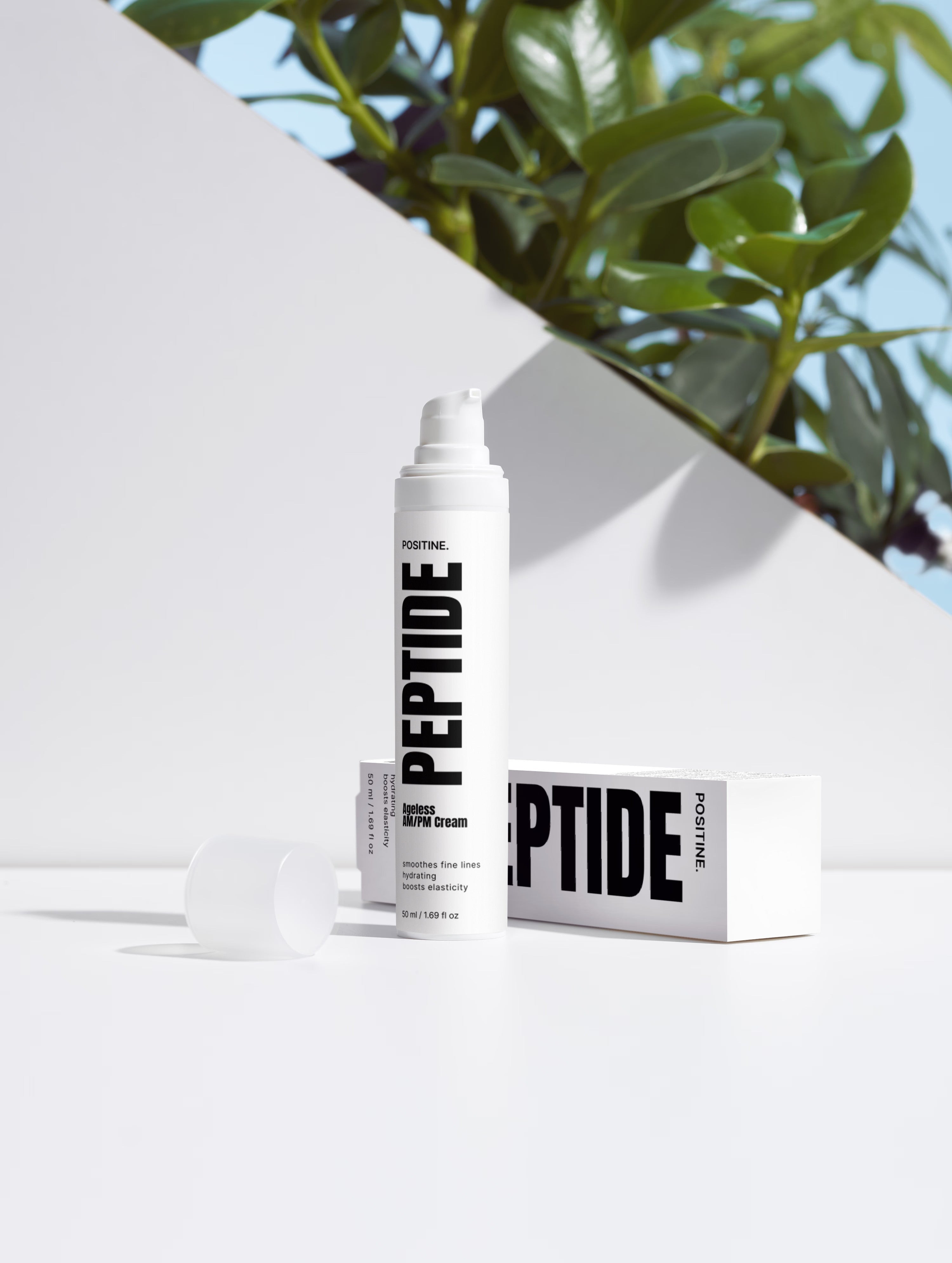
For a moisturising step, Peptide Ageless AM/PM Cream is designed for morning and evening use. Its formula combines peptides with moisturising and skin-conditioning ingredients, making peptides part of a broader daily-care formula rather than treating them as a standalone miracle ingredient.
For people who prefer a more concentrated peptide step, SkinLift Peptide Complex combines multiple peptides in a serum-style formula designed to support firmer-looking, smoother-looking skin and address the appearance of fine lines.
Neither product should be considered a cosmetic equivalent of PDRN or exosome technology.
That is precisely the point.
You do not have to reproduce every emerging skincare trend to build a sophisticated routine. A well-formulated peptide product can occupy its own clear role without pretending to be something else.
The Bottom Line: New Doesn't Automatically Mean Better
PDRN and exosomes are scientifically interesting emerging areas, while peptides represent a more established category in topical cosmetic skincare. The right choice depends on evidence, formulation, skin needs and expectations—not which ingredient is newest.
If you are curious about PDRN or exosomes, follow the research. Look beyond the headline ingredient and ask what evidence exists for the actual formulation you are considering.
If you prefer a simpler approach, there is no reason to feel that your skincare routine is outdated.
Healthy ageing is not a race to collect the newest technologies.
The more useful approach is to understand what your skin needs, choose formulas with a rational purpose and give them enough time and consistency to work.
Frequently Asked Questions
PDRN vs peptides: which is better?
Neither is universally better. Peptides currently have a longer history and more mature evidence base in conventional topical cosmetics, while PDRN is an emerging skincare category with growing but more limited formulation-specific research.
Do I need PDRN skincare after 35?
No. PDRN is not a requirement for an effective skincare routine after 35. Daily sun protection, moisturisation and appropriately selected active ingredients remain more fundamental priorities.
Are peptides proven for skincare?
Certain cosmetic peptides have supportive research, but evidence varies substantially by peptide, concentration, formulation and desired outcome. The presence of the word “peptide” on a label does not guarantee results.
What is the difference between PDRN and exosomes?
PDRN consists of DNA-derived polymer fragments. Exosomes are extracellular vesicles involved in cell-to-cell communication and can carry different biological materials. They are fundamentally different technologies.
Are exosomes in skincare worth it?
Evidence is still developing. Early research is interesting, but reviews continue to identify limitations including small and heterogeneous studies, inconsistent product characterisation and limited standardisation. Consumers should be cautious about paying a substantial premium based on the term “exosome” alone.
What are the best skincare ingredients after 35 or 40?
There is no universal ingredient list. Broad-spectrum sunscreen and effective moisturisation form a sensible foundation. Depending on individual goals and tolerance, ingredients such as retinoids or cosmetic retinol, antioxidants and selected peptides can then be considered.
Can I use peptides instead of PDRN or exosomes?
Peptides should not be described as substitutes or equivalents because the three technologies are different. If your goal is simply to build an evidence-aware everyday skincare routine, however, you do not need PDRN or exosomes for that routine to be complete.
Share:
Tinted Mineral Sunscreen, Explained: White Cast, Benefits and How to Choose