

Dark spots on the face develop when the skin produces or retains extra melanin in certain areas. Common triggers include sun exposure, acne and other inflammation, hormonal changes and repeated irritation. A successful routine therefore needs to do two things at the same time: address existing discolouration and prevent it from becoming darker.
The most important step is daily sun protection. Brightening ingredients can support a more even-looking tone, but results will be limited if ultraviolet exposure continues to stimulate pigmentation.
What are dark spots?
Dark spots are flat areas that appear darker than the surrounding skin. They may be light brown, deep brown or grey-brown depending on skin tone and the type and depth of pigmentation. The general term is hyperpigmentation, but not every dark mark has the same cause.
Identifying the likely trigger matters because sun spots, post-acne marks and melasma do not always respond at the same speed or to the same routine.
What causes dark spots on the face?
1. Sun exposure
Ultraviolet radiation stimulates melanin production. Over time, repeated exposure can create uneven pigmentation and clearly defined sun or age spots, especially on the forehead, cheeks and other areas that receive the most light. Dark marks can also return or become darker without consistent sun protection.
2. Marks after acne or irritation
Inflammation can leave a flat brown or grey mark after a spot, rash, scratch or cosmetic irritation has healed. This is called post-inflammatory hyperpigmentation. Picking blemishes and using harsh products can increase the risk and make marks last longer.
3. Hormonal changes and melasma
Melasma often appears as symmetrical brown or grey-brown patches on the cheeks, forehead or upper lip. Hormonal changes and sun exposure can both contribute. Because melasma can be persistent, professional assessment may be useful when an ordinary skincare routine does not improve it.
4. Friction and repeated inflammation
Regular rubbing, aggressive scrubbing and an impaired skin barrier may keep inflammation active. This can prolong existing marks or create new unevenness, particularly in skin that pigments easily after irritation.
5. Other factors
Some medicines and medical conditions can affect pigmentation. Seek medical advice if a mark is new and changing, has an irregular shape or colour, bleeds, itches persistently or looks different from your other spots.
An effective morning routine for dark spots
Step 1: Gentle cleansing
Use a mild cleanser that removes overnight oil and residue without leaving the skin tight. Over-cleansing does not fade pigmentation faster and may increase irritation.
Step 2: Targeted brightening care
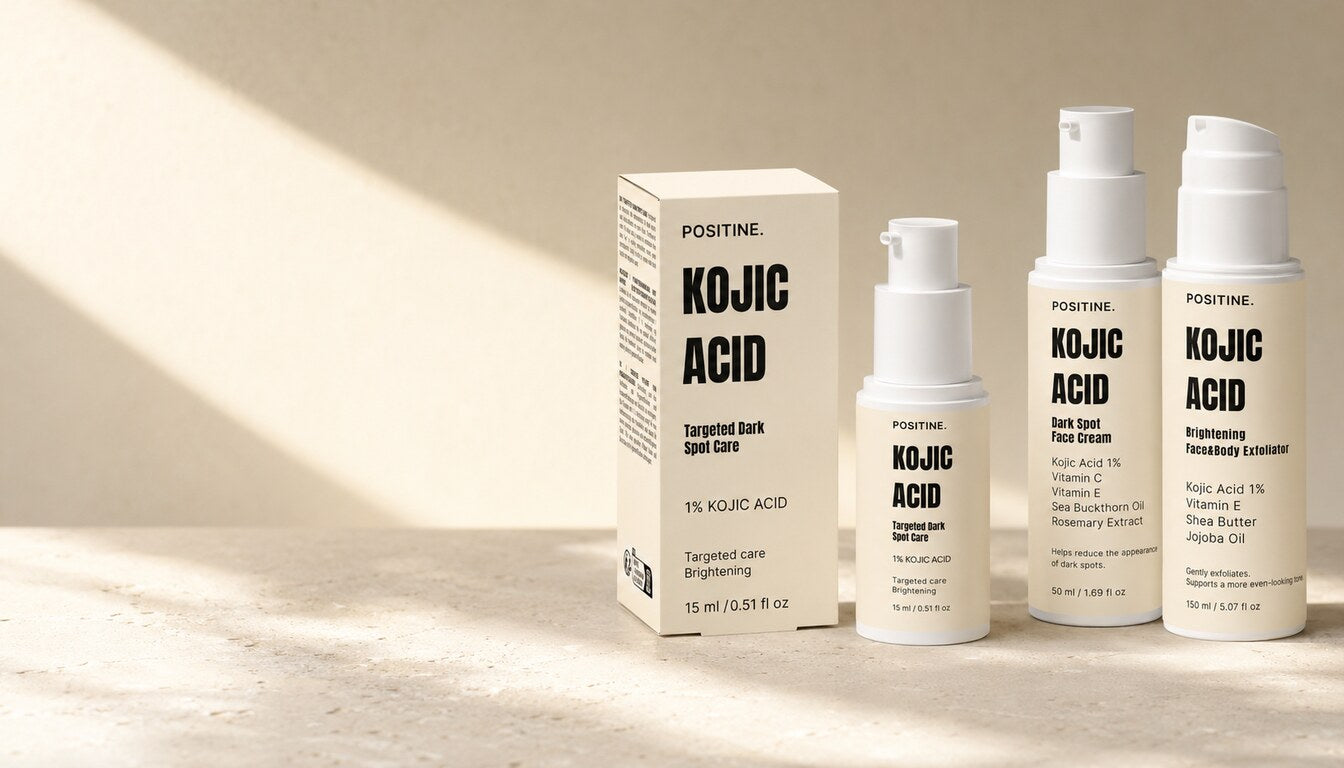
Apply a small amount of the Targeted Dark Spot Care Serum — 1% Kojic Acid to areas with visible uneven tone. Kojic acid is used in skincare to help reduce the appearance of hyperpigmentation by limiting a step involved in melanin formation.
The Positine serum contains 1% kojic acid and is designed for targeted application. Introduce it gradually and perform a patch test before applying it widely, especially if your skin is sensitive.
Step 3: Moisturise
Follow with the Dark Spot Face Cream with Kojic Acid. It combines moisturising care with kojic acid, vitamin C, vitamin E, sea buckthorn oil and rosemary extract. A supported skin barrier is important because irritation can make uneven pigmentation harder to manage.
Step 4: Broad-spectrum sunscreen
Finish with a broad-spectrum sunscreen of at least SPF 30 and apply enough to cover the face, ears and neck. Reapply when spending extended time outdoors, after sweating or after wiping the skin. Sunscreen is not an optional extra in a dark-spot routine: it helps prevent existing marks from deepening and new ones from forming.
An effective evening routine
- Cleanse gently and remove sunscreen or makeup thoroughly.
- Apply the targeted kojic acid serum to dark spots.
- Follow with the dark spot face cream to support hydration.
If using both products together feels too active for your skin, begin with one product once daily or use them on alternate evenings. Increase frequency only when your skin remains comfortable.
Where does exfoliation fit?
Exfoliation removes surface cells and can make skin feel smoother and look brighter, but more is not better. The Brightening Face & Body Exfoliator with Kojic Acid is intended for use two to three times per week on damp skin. Massage gently and rinse thoroughly.
Reduce the frequency if you experience stinging, tightness, persistent redness or flaking. Avoid aggressive rubbing and do not add several new exfoliating acids or retinoids at the same time. Keeping irritation under control is part of treating pigmentation.
How long does it take to fade dark spots?
Dark spots rarely change in a few days. More superficial post-acne marks may gradually look lighter over several weeks, while deeper pigmentation and melasma often take longer. The timeframe depends on the cause, depth of pigment, skin tone, sun exposure and consistency of the routine.
Take photographs in the same lighting every four weeks instead of judging the skin daily. If there is no improvement after a consistent routine, or pigmentation is worsening, consult a dermatologist.
Common mistakes that slow progress
- Skipping sunscreen: UV exposure can counteract the rest of the routine.
- Using too many active ingredients: irritation may worsen post-inflammatory pigmentation.
- Scrubbing the spots: physical force does not remove deeper melanin.
- Picking acne: this increases inflammation and the risk of lasting marks.
- Changing products too quickly: pigmentation usually needs weeks of consistent care.
- Treating every spot as identical: melasma, post-acne marks and sun spots may need different strategies.
Can vitamin C support the routine?
Vitamin C provides antioxidant support and can complement a routine for a more even-looking complexion. If you use a separate vitamin C serum, add only one new active product at a time and monitor tolerance. Read our guides on how to use vitamin C serum and combining vitamin C with niacinamide.
When should you see a dermatologist?
Professional advice is appropriate when pigmentation appears suddenly, changes quickly, covers a large area, does not respond to consistent care or may be melasma. A dermatologist should also assess any spot that changes shape, colour or size, bleeds or looks unlike the others.
The simplest routine to remember
Morning: gentle cleanse, targeted serum, moisturiser and broad-spectrum sunscreen.
Evening: cleanse, targeted serum and moisturiser.
Two to three times weekly: gentle exfoliation, only if the skin tolerates it.
Consistency, sun protection and low irritation matter more than building the longest possible routine.
Frequently asked questions
What is the main cause of dark spots on the face?
Sun exposure is a major trigger, but acne-related inflammation, hormonal changes, irritation and other factors can also cause facial hyperpigmentation.
Can dark spots disappear completely?
Some marks fade substantially, while others remain visible or return. The result depends on the cause and depth of pigmentation, sun exposure and consistency of care.
Can I use kojic acid every day?
Many products are designed for daily use, but tolerance varies. Start gradually, patch test and reduce frequency if irritation develops.
Is sunscreen necessary even in winter?
Yes. UVA radiation is present throughout the year and can contribute to persistent pigmentation. Daily broad-spectrum protection supports more consistent results.
Should I exfoliate dark spots every day?
No. Daily exfoliation can irritate the skin and may worsen post-inflammatory pigmentation. Follow the product instructions and reduce use if the skin becomes uncomfortable.
When should I seek professional advice?
Consult a dermatologist if pigmentation changes rapidly, may be melasma, does not improve with consistent care or if an individual spot changes shape, size or colour, bleeds or looks unusual.
Share:
Can You Use Vitamin C and Niacinamide Together?
What Does Collagen in a Night Cream Actually Do?