

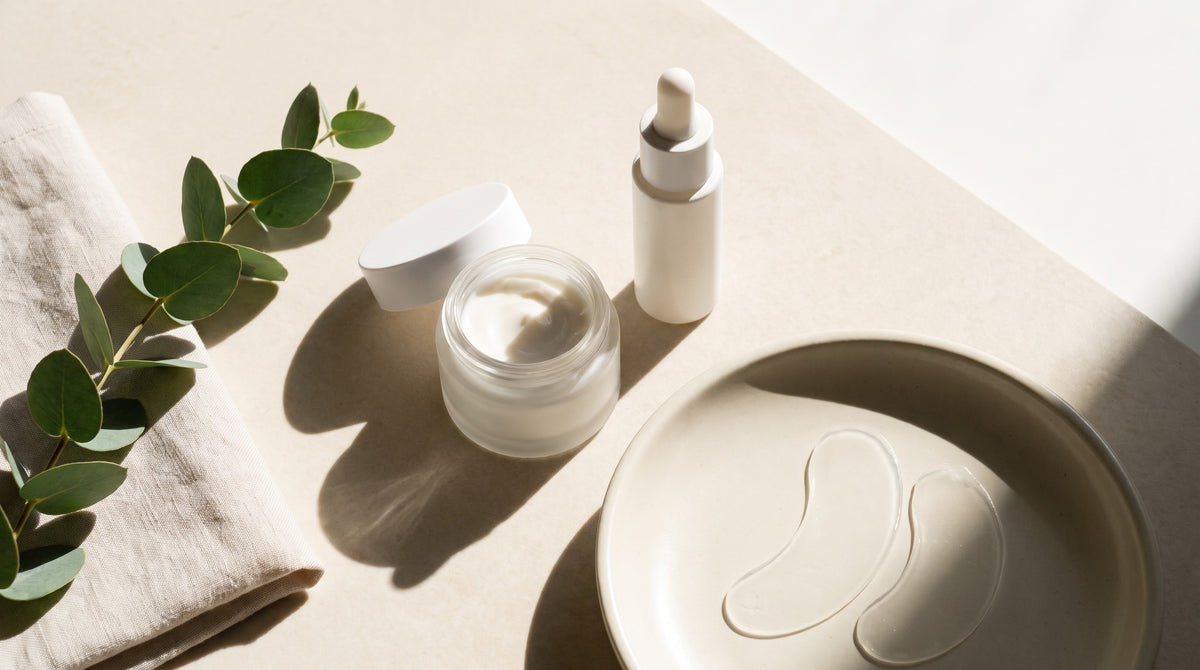
Most people apply eye cream in roughly the right place and get roughly half the benefit. The skin around the eye is the thinnest on the face, it has fewer oil glands than the rest of it, and it moves every time you blink, smile or squint — which is why the how matters here more than it does anywhere else in a routine.
This guide covers where eye cream goes in your routine, how much to use, how it differs from your regular moisturiser, whether you need an eye serum as well, when to start, and how under-eye patches fit in.
Do you need an eye cream at all?
Honest answer: not everyone does. If your face moisturiser is gentle, fragrance-free and doesn't sting when it drifts towards your lash line, taking it up to the orbital bone is a reasonable minimum.
An eye cream earns its place when you want something the rest of your face doesn't need:
- A texture built for a thin, mobile area — light enough not to sit in creases or pill under concealer.
- A concentration suited to delicate skin — actives dosed for the eye area rather than the cheeks.
- A targeted concern — dryness-related fine lines, a tired-looking under-eye, dullness around the eye contour.
So the real eye cream benefit is precision, not magic. If your under-eyes feel tight by mid-afternoon or your concealer is creasing, a dedicated product is usually the fix.
Eye cream vs moisturiser: what's actually different?
| Eye cream | Face moisturiser | |
|---|---|---|
| Designed for | Thin, mobile skin with few oil glands | The whole face, thicker skin |
| Texture | Usually lighter, faster to absorb, made not to pill | Varies from gel to rich cream |
| Fragrance | Often reduced or absent | Frequently fragranced |
| Amount per use | A grain of rice for both eyes | A blueberry-sized amount for the face |
| Applied with | The ring finger, patted | Fingertips or palms, smoothed |
The practical difference is dose and delicacy. A rich night cream isn't dangerous around the eyes, but a heavy occlusive layer on skin that can't absorb it tends to look puffy in the morning rather than plumper.
How to apply eye cream, step by step
- Start on clean, slightly damp skin. Applied straight after cleansing or a hydrating step, the cream spreads further and drags less.
- Take a grain of rice for both eyes. Warm it for a second between your fingertips so it thins out.
- Dot it along the orbital bone. That's the bony ridge you can feel circling the eye socket — not right up against the lashes. Three or four small dots under the eye, one or two at the outer corner.
- Pat, don't rub. Use your ring finger: it's the weakest finger, so it applies the least pressure by default. Tap gently until the product disappears.
- Let warmth do the rest. Body heat carries the product upward and inward on its own. Anything you apply too close to the lash line can migrate into the eye overnight.
- Avoid the inner corner and the lid margin. This is the most common cause of watering, stinging and morning puffiness.
- Wait a minute before the next layer. Rushing straight to sunscreen or concealer is what makes products pill.
Positine's Peptide Age-Defying Eye Cream is formulated for exactly this handling — a light cream with Hexapeptide-11 and Dipalmitoyl Hydroxyproline for the look of firmer, smoother skin, plus jojoba and borage seed oils, glycerin and Sodium PCA for lasting comfort. It absorbs fast and is made not to pill under concealer. It's Ecocert COSMOS Natural certified, vegan, gluten-free and nut-free.
How much eye cream to use
A grain of rice, total, for both eyes. Half per side.
More is not better here, for a mechanical reason: the eye area can only absorb so much, and the surplus sits on the surface, where it creeps into the eye, creases under make-up, or leaves the under-eye looking swollen the next morning. If a product feels heavy, the answer is almost always less product rather than a different product.
A 15 ml eye cream used at that dose twice a day lasts months — which is the point of the small jar.
Where eye cream goes in your routine
The general rule of thinnest to thickest applies, with one adjustment: the eye area goes in before heavier face creams, so a rich moisturiser doesn't get dragged into it.
Morning
- Cleanse or rinse
- Toner or hydrating mist
- Face serum
- Eye cream
- Face moisturiser
- Sunscreen — over the whole face, including up to the orbital bone
Evening
- Remove make-up, then cleanse
- Treatment serum
- Eye cream or eye serum
- Night cream, kept to the face
- Facial oil, if you use one
If you want to know why the hydrating step before the eye cream matters so much, our guide to dehydrated vs dry skin explains the difference between adding water and sealing it in.
Eye serum vs eye cream — and can you use both?
They are not competing products; they sit at different points in the same routine.
- An eye serum is lighter and water-based, goes on first, and is the usual home for an active you want delivered efficiently.
- An eye cream is richer, goes on second, and holds that hydration in place while adding comfort and slip.
Using both is entirely reasonable — serum, then cream — and many people split them by time of day instead: serum at night, cream in the morning. That's often the easier route if your eye area is reactive, because it spaces the actives out.
Positine's Retinol Alternative Eye Serum is built for the evening slot. It uses Bidens pilosa extract, a plant-based alternative to retinol, with hyaluronic acid and Sodium PCA for moisture and vitamins C and E for antioxidant support — designed for consistent daily use and gradual change rather than aggressive correction. It's suitable for all skin types, vegan, gluten-free and Ecocert COSMOS Natural certified.
Where the concern is dullness and a tired-looking eye contour rather than fine lines, the Brightening Eye Cream takes a different route: ascorbyl palmitate, a vitamin C derivative, alongside hydrolyzed hyaluronic acid and sodium hyaluronate, with grape leaf, horse chestnut and ginkgo extracts, shea butter and sunflower seed oil.
When to start using eye cream
There's no age at which the eye area switches on. What changes is your reason for using one:
- Any age, if the area feels dry or tight. Comfort is a good enough reason on its own.
- When expression lines start to linger. Lines that stay visible after your face relaxes are the usual prompt.
- When concealer starts to crease. That's usually a hydration and texture signal rather than an ageing one.
Starting earlier does no harm as long as the product is gentle. Starting later isn't a lost cause either — consistency over months matters far more than the year you began.
How to use eye patches — and when they help
Under-eye patches do a different job from a cream. A cream is the daily habit; patches are a concentrated 15-minute reset before something that matters, or after a night that didn't include much sleep.
How to use them:
- Apply to clean, dry under-eyes — hydrogel doesn't adhere well over cream or oil.
- Sit the wider end under the eye, along the orbital bone, and smooth out any air pockets.
- Leave on for 15 minutes. Longer isn't better; once a patch starts to dry it can draw moisture back out.
- Remove and press the remaining serum into the skin. No rinsing needed.
- Follow with your eye cream to seal it in.
They're single-use, so treat them as an occasional step rather than a nightly one.
Matching patches to the concern
| If the issue is… | Look for | Positine option |
|---|---|---|
| Dryness and a tired look | Sodium hyaluronate, glycerin, panthenol | Anti-Fatigue Hydrogel Eye Patches — with rooibos leaf and cherimoya fruit extract |
| Puffiness after a late night | Caffeine, plus a stable vitamin C | Caffeine + Vitamin C Energizing Hydrogel Eye Patches — fragrance-free and allergen-label-free |
| Dryness-related fine lines | Niacinamide with hyaluronic acid | Anti-Age Hydrogel Eye Patches — gold hydrogel, fragrance-free, all skin types |
All three are dermatologically tested and come as 7 pairs.
What an eye cream can't do
Worth saying plainly, because the category over-promises more than most.
- Dark circles have several causes, and only some respond to skincare. Pigmentation and surface dullness can improve. Shadowing caused by the shape of the orbital bone, or by blood vessels visible through very thin skin, is structural — no topical product changes it.
- Puffiness is often fluid, not skin. Sleep position, salt and allergies move it more than any cream. A cooling patch helps the appearance temporarily.
- Deep expression lines soften rather than disappear. Hydration and peptides improve how lines look; they don't stop the muscle movement that creates them.
- Nothing works without sun protection. UV exposure is the single largest external factor in how the eye area ages. Sunscreen and sunglasses do more than the contents of any jar.
If your eye area is persistently swollen, itchy, or changes suddenly, that's worth a conversation with a pharmacist, dermatologist or doctor rather than a new product.
The short version
A grain of rice for both eyes, patted on with the ring finger along the orbital bone, on slightly damp skin, before your face moisturiser. Serum first if you use one. Patches when you need a 15-minute reset, not nightly. Sunscreen every morning. Then give it eight to twelve weeks — the eye area responds slowly, and consistency is what it responds to.
Shop the Peptide Age-Defying Eye Cream →
Frequently asked questions
How do you apply eye cream correctly?
Take a grain of rice for both eyes, warm it between your fingertips, and dot it along the orbital bone — the bony ridge circling the eye socket — rather than close to the lashes. Pat it in with your ring finger until it disappears, avoiding the inner corner and the lid margin, then wait about a minute before your next layer.
How much eye cream should you use?
A grain of rice in total for both eyes, so half per side. The eye area can only absorb a limited amount; the surplus creeps into the eye, creases under make-up, or leaves the under-eye looking swollen the next morning.
Does eye cream go on before or after moisturiser?
Before. Applying eye cream first means a richer face moisturiser isn't dragged into the delicate eye area, and the lighter product isn't sitting on top of an occlusive layer it can't get through.
Is eye cream different from face moisturiser?
Yes, mainly in texture, dose and fragrance. Eye creams are formulated for thin, mobile skin with few oil glands — lighter, made not to pill under concealer, and often with reduced or no fragrance. A gentle fragrance-free face moisturiser taken up to the orbital bone is a reasonable minimum if you don't use a dedicated product.
Eye serum or eye cream — which should you use?
They're complementary rather than alternatives. A serum is lighter and goes on first, usually carrying the active; a cream goes on second and holds that hydration in place. Using both is fine, and splitting them by time of day — serum at night, cream in the morning — suits a reactive eye area.
When should you start using eye cream?
There's no set age. Start when there's a reason: the area feels dry or tight, expression lines linger after your face relaxes, or concealer begins to crease. Starting early does no harm with a gentle product, and starting later isn't a lost cause — consistency matters more than the year you began.
How long do you leave under-eye patches on?
About 15 minutes, on clean and dry skin. Longer isn't better: once a hydrogel patch begins to dry out it can draw moisture back out of the skin. Remove them, press the remaining serum in, and follow with your eye cream.
How long does eye cream take to work?
Hydration and comfort improve within days. Changes in how fine lines and tone look develop over weeks — eight to twelve weeks of consistent use is a realistic window, and daily sun protection does as much for the result as the product does.
Share:
Face Oil for Dry Skin: How to Use One (and When It Beats a Moisturiser)