

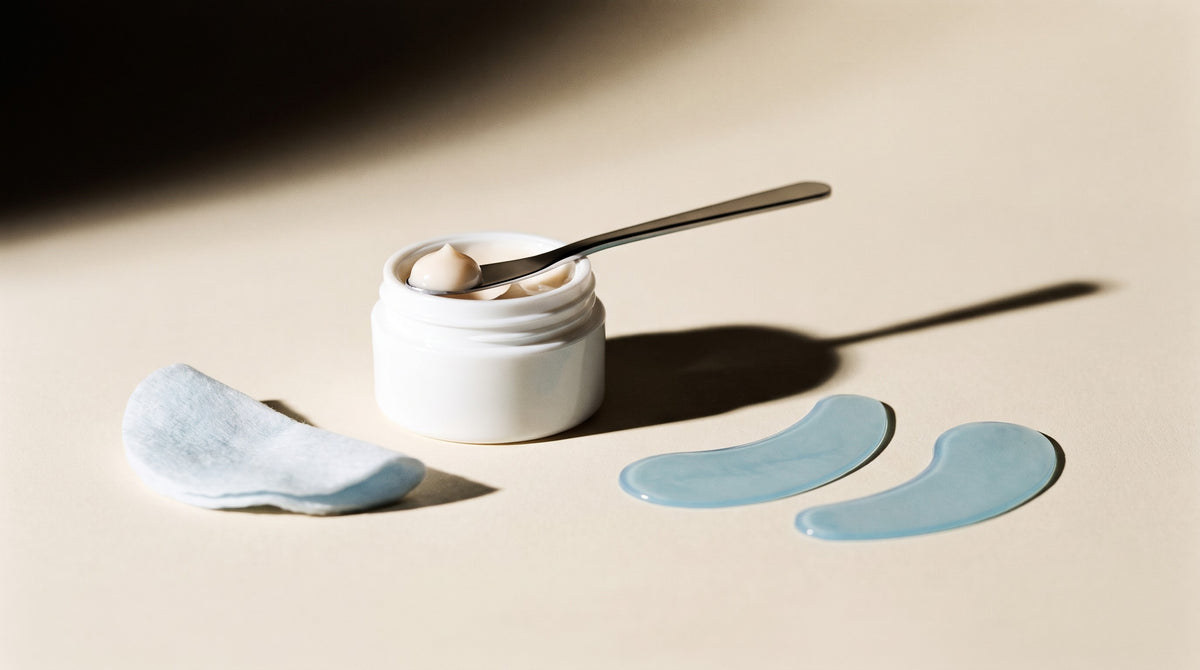
Not all dark circles are the same — and that is exactly why so many eye creams disappoint. Here is how to tell which type you have, and what each one actually responds to.
“Dark circles under eyes” is one phrase covering at least three unrelated things: extra pigment in the skin, blood vessels showing through skin that is naturally thin, and shadows cast by the shape of the eye socket. They look similar in the mirror and respond very differently to skincare. Working out which one you are looking at is the single most useful thing you can do before buying anything.
Why dark circles are really three different problems
The skin around the eye is the thinnest on the face, it has fewer oil glands than the cheek, and it sits directly over a dense network of fine blood vessels and a bony socket. That combination means almost anything happening underneath — pigment, circulation, fluid, or bone structure — shows on the surface. Dermatology generally sorts under-eye darkness into pigmented, vascular and structural, and most people have a mix of two.
Type 1: Pigmented dark circles
These read brown or tan rather than blue, and the colour sits in the skin itself. Common contributors are genetics and naturally deeper skin tones (where periorbital pigmentation is more frequent), sun exposure without protection, and post-inflammatory marks left behind after rubbing or eczema around the eye.
The quick test: gently stretch the skin sideways. If the brown tone stretches with the skin and stays visible, it is pigment.
What helps: this is the type that responds best to skincare, because topical actives can work on pigment. Daily SPF on the eye area is the highest-value habit, since UV keeps driving pigment production. Brightening antioxidants are the next step — our Brightening Eye Cream uses ascorbyl palmitate, a vitamin C derivative chosen because it is more stable and better tolerated on delicate skin than pure ascorbic acid, alongside grape leaf extract. Expect gradual change over weeks, not days.
Type 2: Vascular dark circles and puffy eyes
These read blue, purple or grey. Nothing is wrong with the pigment — you are simply seeing the blood vessels through translucent skin. Poor sleep, dehydration, alcohol, salt, allergies and crying all make vessels more visible or let fluid pool, which is why this type fluctuates day to day. It is also the type most often paired with puffy eyes and under-eye bags in the morning.
The quick test: press gently for a few seconds and release. If the colour briefly fades and then refills, it is vascular. If it looks dramatically better on a well-rested day, that is the same signal.
What helps: anything that supports microcirculation and reduces fluid pooling. Caffeine is the best-known ingredient here and works by constricting vessels temporarily — our Caffeine + Vitamin C Energizing Hydrogel Eye Patches pair it with vitamin C for a cooling fifteen-minute reset before an early meeting. Cool temperature alone does a surprising amount of work, which is why patches straight from the fridge feel effective. Botanical extracts traditionally used for circulation, such as the horse chestnut and ginkgo in our eye cream, belong in this category too. Managing the trigger matters more than any product: if allergies are behind it, treating the allergy will outperform every cream.
Be realistic about the ceiling: these effects are cosmetic and temporary. A caffeine patch depuffs for hours, not permanently.
Type 3: Structural shadows
Here the skin colour is normal and you are looking at a shadow. The tear trough — the natural groove between the lower lid and the cheek — deepens with age as fat pads shift and volume is lost, and the hollow catches shadow under overhead light. Some people have a pronounced tear trough in their twenties purely from facial structure.
The quick test: look in a mirror by a window, then tilt your chin up. If the darkness largely disappears when the light angle changes, it is a shadow, not pigment.
What helps: honestly, no cream fills a hollow. Hydration and good light-handling can soften the edge of the shadow — well-hydrated skin reflects light more evenly, and hyaluronic acid plus occlusive comfort is the mechanism behind that, which is what the hydrolyzed hyaluronic acid, sodium hyaluronate and shea butter in our eye cream are doing. Firmer-looking skin helps at the margins as well, which is where a peptide formula like our Peptide Age-Defying Eye Cream fits. But meaningful change to a deep tear trough is the territory of an aesthetic practitioner, not a jar. Anyone promising otherwise is overselling.
A quick self-check
| Signal | Pigmented | Vascular | Structural |
|---|---|---|---|
| Colour | Brown, tan | Blue, purple, grey | Grey-neutral shadow |
| Changes with sleep | No | Yes, noticeably | No |
| Changes with light angle | No | Slightly | Yes, strongly |
| Stretching the skin | Colour stays | Colour fades | Colour disappears |
| Responds best to | SPF, antioxidants | Caffeine, cold, trigger control | Hydration, professional treatment |
How to reduce dark circles: a realistic routine
- Protect first. Sunscreen around the eye every morning. For pigmented circles this is not optional, it is the main intervention.
- Hydrate consistently. A dedicated eye product morning and night. Consistency beats potency on skin this thin.
- Target the right mechanism. Antioxidants for pigment, caffeine and cold for vascular puffiness, hydration and light-reflection for shadow.
- Apply gently. Pat with the ring finger, stay on the orbital bone rather than close to the lash line, and do not drag. Rubbing worsens pigmented circles. Our guide to how to apply eye cream covers order and amount.
- Fix the inputs. Sleep, hydration, salt, alcohol and untreated allergies change under-eye appearance more than most products do.
- Give it eight weeks. Pigment turns over slowly. Judging an eye cream after a week tells you nothing.
When to speak to a professional
See a doctor or dermatologist if darkness appears suddenly, affects one eye only, comes with swelling, pain or vision changes, or arrives alongside unexplained fatigue — under-eye changes occasionally reflect something systemic such as thyroid or iron issues, and those need proper assessment rather than skincare. If a deep tear trough is your main concern, a consultation with a qualified aesthetic practitioner will give you a straight answer about what is achievable. Nothing in this article is medical advice, and if you have a diagnosed condition affecting the eye area, check with your clinician before adding actives.
The short version
Identify the type before you shop. Pigmented circles genuinely improve with sunscreen and brightening antioxidants. Vascular circles and puffy eyes respond quickly but temporarily to caffeine and cold. Structural shadows need hydration for softening and a professional for real change. An eye cream that targets the wrong mechanism will feel pleasant and do very little — which is the real reason so many people conclude that eye creams do not work.
Share:
Gel Moisturizer vs Cream: Which Texture Does Your Skin Need?