

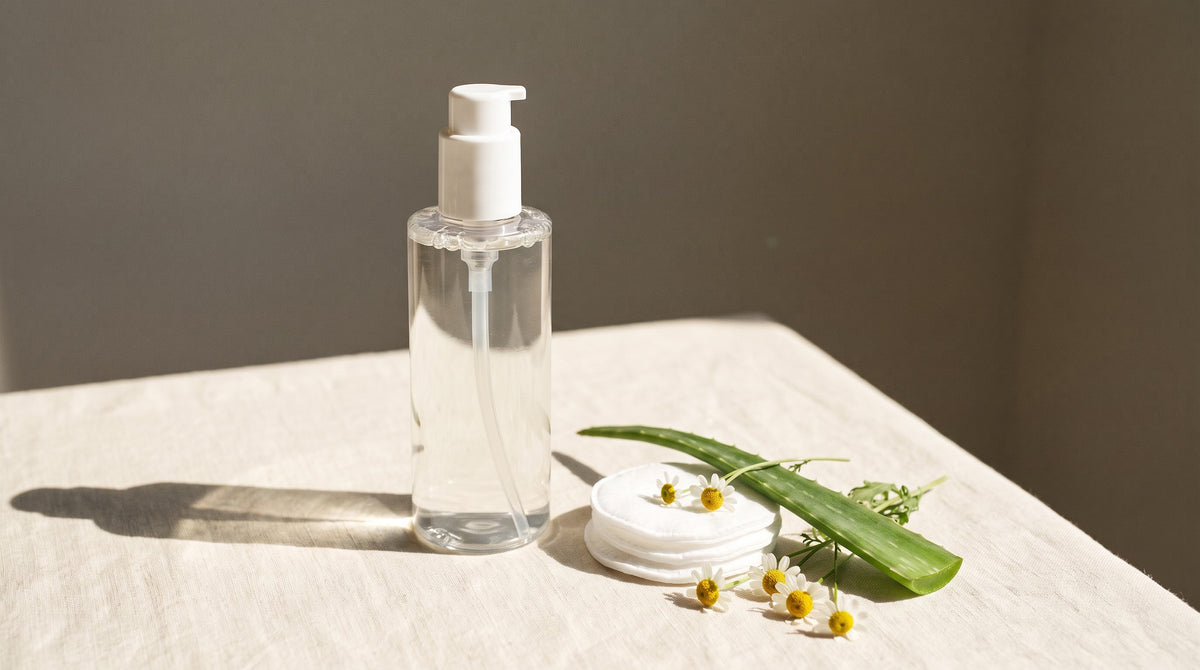
Micellar water is one of the few skincare products that looks exactly like what it is replacing: water. Yet it lifts makeup, sunscreen and the day's oil onto a cotton pad in a way plain water never could. Here is what micellar water actually is, how it works, whether you need to rinse it off, and how to fit it into a routine for your skin type.
What is micellar water?
Micellar water is a no-rinse cleanser made of mostly water plus a small amount of very mild surfactants. In water, those surfactant molecules gather into tiny spheres called micelles. Each surfactant molecule has a water-loving end and an oil-loving end, so in a micelle the oil-loving ends point inwards and form a small oily core.
That core is the whole trick. When you sweep a soaked cotton pad across your face, the micelles attract oil-based dirt — sebum, makeup, sunscreen — and hold on to it, so it leaves your skin on the pad instead of being smeared around.
What does micellar water do?
In practice, micellar water does three jobs in one step:
- Removes makeup — foundation, powder, everyday mascara and lip colour.
- Cleanses — lifts sebum, sweat and daily build-up without lathering.
- Refreshes — it can be used in the morning, after the gym or on the go, where a sink is not always available.
Because the surfactants are gentle and there is no foaming or scrubbing, micellar water is usually less stripping than a foaming wash. That is its main benefit: clean skin with less tightness.
Is micellar water good for your skin?
For most skin types, yes — especially when the formula is simple and free of harsh surfactants and alcohol. What makes a good micellar water is what else is in the bottle.
Our Micellar Cleansing Water uses plant-based caprylyl/capryl glucoside micelles to trap makeup and impurities. Alongside them, organic aloe vera juice soothes and hydrates, chamomile and linden flower extracts help calm the skin, glycerin, betaine and sodium hyaluronate (a form of hyaluronic acid) help keep moisture in, and a touch of lactic acid supports gentle skin renewal.
Micellar water for sensitive skin: the low-friction, no-foam format is one reason people with reactive skin like it. Still, patch test any new product on the inner forearm first, and press rather than rub. Our guide to building a skincare routine for sensitive skin covers the rest of the routine.
How to use micellar water
- Soak a cotton pad. It should be visibly wet — a half-dry pad makes you rub.
- Press and hold on the eyes and lips for a few seconds to let the micelles loosen makeup.
- Sweep gently outwards over the face, from the centre towards the hairline, without scrubbing.
- Switch to a fresh pad until it comes away clean.
- Continue your routine with toner, serum and moisturiser — and SPF in the morning.
Use it morning and evening, or whenever you need a quick cleanse.
Do you need to rinse off micellar water?
No — micellar water is designed as a no-rinse cleanser, and ours needs no rinsing. That said, some people prefer to follow it with a splash of lukewarm water or a cleanser, particularly if they have very sensitive skin or have removed a full face of makeup. Either way is fine; the point is that your skin feels clean and comfortable, not tight or tacky.
Micellar water vs toner: is micellar water a toner?
No. They look alike, but they do different jobs. Micellar water removes things from your skin; a toner adds something back after cleansing — usually hydration, and sometimes a gentle active.
| Micellar water | Hydrating toner | |
|---|---|---|
| Main job | Removes makeup, oil and impurities | Rehydrates and preps skin after cleansing |
| Key ingredient type | Mild surfactants (micelles) | Humectants such as hyaluronic acid |
| When | First step | After cleansing |
| Positine option | Micellar Cleansing Water | Hydrating Toner |
If you only want one product, cleanse with micellar water. If you want both, micellar water comes first and a fragrance-free hydrating toner with hyaluronic acid follows.
Micellar water vs cleanser: can it replace your face wash?
On light-makeup days, micellar water can be your only cleanse. On heavy-makeup or high-SPF days, it works best as the first step of a double cleanse, followed by a cleansing milk such as our Gentle Cleansing Milk or the Sensitive Skin Oil-To-Milk Cleanser.
For waterproof mascara and long-wear liner, micellar water usually needs several passes. An oil-and-water formula like our BiPhasic Make-up Remover is the better tool there — we explain why in how to remove waterproof mascara.
Micellar water for oily and dry skin
Oily or blemish-prone skin: micellar water lifts excess sebum without the squeaky, over-stripped feeling that can leave skin feeling oilier later. Use it twice a day and follow with a light, oil-free moisturiser.
Dry skin: choose a formula with humectants — glycerin, hyaluronic acid, aloe vera — and follow straight away with a hydrating toner and moisturiser while the skin is still slightly damp.
Frequently asked questions
Can you use micellar water every day?
Yes. A gentle micellar water is made for daily use, morning and evening.
Can micellar water be used around the eyes?
Yes — press the pad on closed eyes for a few seconds, then sweep downwards. Keep it on the lashes and lid, not in the eye.
Does micellar water remove sunscreen?
It lifts much of it, but for high-SPF or water-resistant sunscreen, follow with a second cleanse.
Micellar water or makeup remover — which do I need?
Micellar water is an all-over cleanser and makeup remover for everyday makeup. A biphasic remover is a specialist for waterproof eye and lip products. Many people keep both.
The short version
Micellar water is mild surfactant micelles in water: they grab oil, makeup and dirt and carry them away on a cotton pad, with no rinsing required. It is not a toner and not a scrub — it is a gentle first step. Soak the pad, press, sweep, and follow with the rest of your routine.
This article is for general education and is not medical advice. If you have a skin condition, persistent irritation or a known allergy, speak to a dermatologist or other qualified healthcare professional before changing your routine.
Share:
Peptide Cream: What It Does and How to Use It Morning and Night